ULA Vulcan Failure Affects 40 Amazon Leo Satellites
ULA Vulcan Failure Affects 40 Amazon Leo Satellites
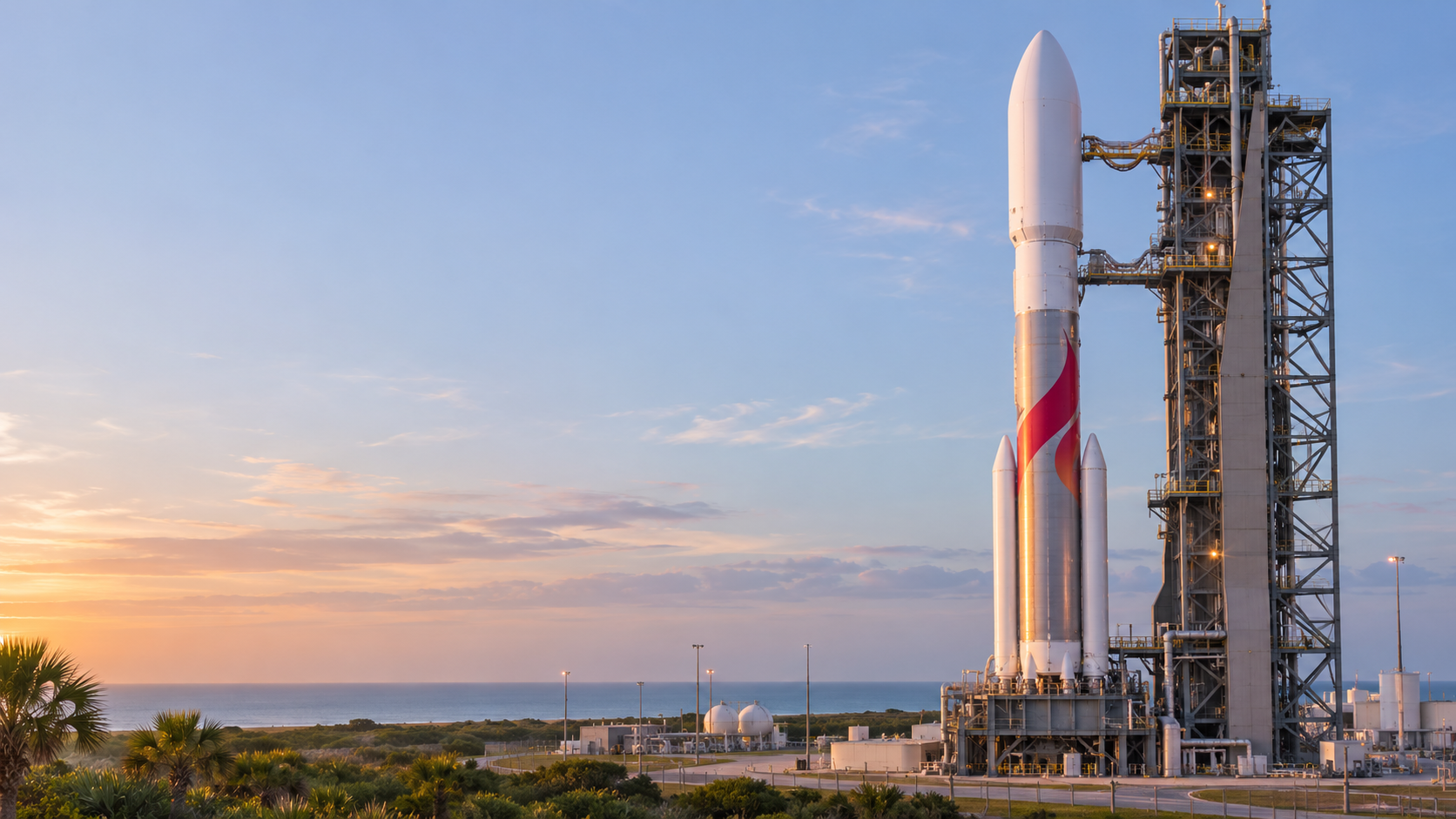
United Launch Alliance reportedly lost a Vulcan rocket during a mission carrying 40 Amazon Leo internet satellites, creating a major setback for both companies. Preliminary reports place the failure approximately 10 minutes after liftoff, preventing the payload from reaching its planned orbit.
The mission, identified in the supplied reports as Amazon Leo 1, launched from Cape Canaveral, Florida. The available information does not identify the failed component, provide a confirmed technical cause, or establish whether the satellites were physically destroyed.
The spacecraft may have been lost, stranded, or rendered unusable after failing to reach their intended orbit. Further details require official statements and investigation findings.
What Is Confirmed About the Vulcan Failure?
The supplied reports support these basic facts:
- United Launch Alliance operated the Vulcan launch vehicle.
- The payload consisted of 40 Amazon Leo satellites.
- The mission was referred to as Amazon Leo 1.
- The launch took place from Cape Canaveral, Florida.
- Reports placed the failure approximately 10 minutes after liftoff.
- The rocket did not complete the planned mission.
- The satellites were not successfully deployed into their intended operational orbit.
The reports do not establish the exact launch date or time. They also do not explain whether the vehicle broke apart, lost propulsion, encountered a guidance problem, suffered a stage-separation issue, or experienced another anomaly.
That distinction matters. Describing satellites as “lost” does not necessarily mean that every spacecraft was physically destroyed. A satellite can become unusable if a rocket fails to place it in the correct orbit, even if the hardware survives intact.
What Happened During the Launch?
Based on the limited information available, the mission sequence was as follows:
- A ULA Vulcan rocket lifted off from Cape Canaveral.
- The vehicle carried 40 Amazon Leo satellites.
- The mission encountered a failure about 10 minutes after launch.
- Vulcan did not complete its planned ascent and deployment sequence.
- The satellites failed to enter their intended orbit.
The timing provides context but not a diagnosis. Depending on the mission profile, the failure period could have involved continued propulsion, upper-stage operation, guidance, navigation, communications, or preparation for payload separation.
It would be premature to identify any of those systems as responsible. The supplied reports contain no telemetry, range data, official ULA statement, or investigation findings.
Rocket Loss, Payload Loss, and Satellite Destruction
These terms describe different outcomes:
- Rocket loss: The launch vehicle failed to complete its mission.
- Payload loss: The satellites were not delivered to their planned orbit or could not perform their intended mission.
- Satellite destruction: The spacecraft were physically destroyed or rendered beyond recovery.
The available reporting supports the first two descriptions. It does not confirm the third. The most precise description is that ULA lost the Vulcan mission and that 40 Amazon Leo satellites were affected after failing to reach their planned orbit.
What Is the Vulcan Rocket?
Vulcan is United Launch Alliance’s next-generation launch vehicle. ULA was formed by Boeing and Lockheed Martin and provides launch services for government, national-security, and commercial customers.
The rocket was developed to support a wide range of missions and gradually replace ULA’s Atlas V and Delta IV Heavy systems. Its customers may include communications companies, government agencies, scientific organizations, and national-security operators.
A failed commercial launch involving 40 satellites matters because launch providers build customer confidence through consistent mission execution. A large payload failure can affect perceptions of technical reliability, schedule certainty, insurance exposure, and the provider’s ability to support constellation deployments.
A single failure does not determine Vulcan’s long-term viability. The consequences will depend on the investigation’s findings. A contained manufacturing error would require a different response from a design problem affecting multiple vehicles. The recovery timeline will also depend on corrective work, regulatory reviews, vehicle availability, and upcoming mission schedules.
What Are Amazon Leo Satellites?
Amazon Leo is Amazon’s low-Earth-orbit satellite-internet initiative. The reported mission carried 40 satellites intended to join that constellation.
Low-Earth-orbit broadband systems use many satellites flying relatively close to Earth. The spacecraft work with ground stations, network infrastructure, and user terminals to provide internet connectivity. Because each satellite covers only part of the planet at a given time, operators rely on coordinated orbital planes and large numbers of spacecraft.
Every launch can add coverage, network capacity, redundancy, or geographic reach. Losing an entire batch can therefore affect more than one launch milestone. It can alter orbital deployment plans and delay network capacity or coverage targets.
The available reports do not establish how many Amazon Leo satellites are already in orbit, which regions the affected spacecraft were intended to serve, or how Amazon will revise its deployment schedule.
Potential Effects on Amazon’s Leo Network
The immediate effect is a delay in satellite deployment. The 40 spacecraft will not contribute to the planned network at the expected time if the reported mission outcome is confirmed.
Amazon may need to:
- Assign replacement satellites to later missions.
- Change the order of orbital deployments.
- Add spacecraft to future launches.
- Rework integration and testing schedules.
- Reassess launch-provider risk.
- Coordinate revised milestones with regulators and network partners.
A failed launch can also create longer-term costs, including replacement satellite production, additional launch and insurance expenses, delays in reaching constellation scale, and changes to launch sequencing.
The incident does not automatically end Amazon’s Leo project. Large constellations are built through repeated launches, and operators generally plan for spacecraft replacement and launch risk. The lasting effect will depend on how quickly Amazon can replace the satellites and whether future missions proceed successfully.
What the Failure Means for ULA
The mishap creates technical, operational, and commercial pressure for ULA. The company will need to determine whether the failure originated in the vehicle, payload interface, ground systems, or launch environment.
Potential investigation categories include:
- Vehicle design.
- Manufacturing or assembly.
- Software and guidance.
- Propulsion.
- Stage performance.
- Payload integration.
- Ground-support equipment.
- Launch-range operations.
- Environmental conditions.
These are possible areas of review, not confirmed explanations.
Investigators are likely to examine telemetry, tracking data, production records, software versions, engine performance, communications logs, and any available hardware. The Federal Aviation Administration and other organizations may participate depending on the mission’s regulatory status and the nature of the event.
The investigation could affect future Vulcan missions. Government payloads may face additional technical reviews, while commercial customers may request schedule updates and risk assessments. ULA could pause or modify upcoming preparations if investigators identify a problem that may affect other vehicles.
Reliability and Customer Confidence
Customers evaluate more than a rocket’s launch record. They also consider technical transparency, schedule performance, production quality, mission assurance, and the provider’s response to failure.
Confidence can recover when a launch company provides:
- A credible root-cause explanation.
- Specific corrective actions.
- Evidence that the corrections were tested.
- Clear communication with customers and regulators.
- A successful return-to-flight mission.
The available sources do not provide enough verified information to compare Vulcan’s reliability with competing launch vehicles. Such comparisons should wait for a confirmed flight history and comparable mission data.
What Investigators Will Examine Next
The official explanation will depend on data collected from the vehicle, launch range, and tracking network. Investigators are likely to examine:
- Vehicle telemetry.
- Ground radar and tracking data.
- Engine and stage performance.
- Guidance and navigation records.
- Separation-event data.
- Launch-range communications.
- Software and configuration records.
- Debris or recovery findings, if available.
- Payload signals, if any spacecraft remain operational.
The investigation must establish five points:
- The first abnormal event.
- The systems affected afterward.
- Whether the payload remained attached or became unrecoverable.
- The technical and operational factors that contributed to the failure.
- The corrective actions required before another launch.
The cause should not be described as confirmed until ULA or the relevant authorities publish findings. Early reports may change the failure time, payload status, affected satellite count, or mission designation as more information becomes available.
Timeline of the Amazon Leo 1 Mishap
Before liftoff: ULA prepares a Vulcan rocket carrying 40 Amazon Leo satellites from Cape Canaveral.
Liftoff: The rocket launches from Florida.
Approximately 10 minutes later: Reports identify a mission failure. Nacionale
Immediate outcome: The rocket does not complete the planned mission, and the satellites are not successfully deployed into their intended orbit.
Investigation phase: ULA and relevant authorities assess telemetry, vehicle performance, and payload status.
Next update: Officials must confirm the cause, the final status of the satellites, and the return-to-flight plan.
What Happens Next?
ULA must determine the failure mechanism and coordinate its response with regulators, customers, and launch-range authorities. The company must also establish whether the issue is isolated or could affect other Vulcan vehicles.
Amazon must assess the effect on its Leo deployment plan. That review may include replacement satellite production, future launch assignments, mission schedules, network rollout targets, orbital priorities, and risk-reduction measures.
The next major milestone will be a confirmed explanation of what failed. The following milestone will be a validated corrective-action plan and an eventual return to flight.
The reported ULA Vulcan failure is a serious setback for ULA and Amazon’s Leo deployment effort. Its lasting impact remains uncertain. The root cause, replacement timeline, regulatory response, and performance of future launches will determine whether the incident becomes a contained delay or a broader disruption.
Frequently Asked Questions
What happened to the ULA Vulcan rocket?
The ULA Vulcan rocket reportedly failed about 10 minutes after launching from Cape Canaveral while carrying 40 Amazon Leo satellites. The available reports do not identify a confirmed technical cause.
How many Amazon Leo satellites were lost?
Reports identify 40 Amazon Leo satellites as affected by the failed mission. The available information does not clarify whether the spacecraft were physically destroyed or became unusable after failing to reach their planned orbit.
Where did the Amazon Leo launch take place?
The mission launched from Cape Canaveral, Florida, according to the supplied Florida Today summary. Florida Today
What caused the Vulcan rocket failure?
No confirmed cause appears in the available source summaries. Investigators must review telemetry, tracking data, vehicle records, payload information, and launch-range communications before identifying the failure mechanism.
Will the Vulcan rocket be grounded?
The supplied sources do not confirm a grounding decision. ULA and relevant regulators may require an investigation and corrective actions before another Vulcan launch, depending on the findings.
Will Amazon’s Leo project be delayed?
The loss of 40 satellites will likely affect the deployment schedule, but the extent of any delay is unknown. Amazon’s response will depend on replacement production, future launch availability, and the official investigation.
Sources and Attribution
The initial report of the ULA Vulcan loss and the 40-satellite payload comes from the supplied Spaceflight Now summary. Spaceflight Now
The Cape Canaveral location and Amazon Leo 1 mission reference come from the supplied Florida Today summary. Florida Today
The approximate 10-minute failure timing comes from the supplied Nacionale summary. Nacionale
Official statements from ULA, Amazon, the Federal Aviation Administration, or the launch range should be added when available.