Grant Wilson Gives Indiana More Answers Against USC
Grant Wilson Gives Indiana More Answers Against USC
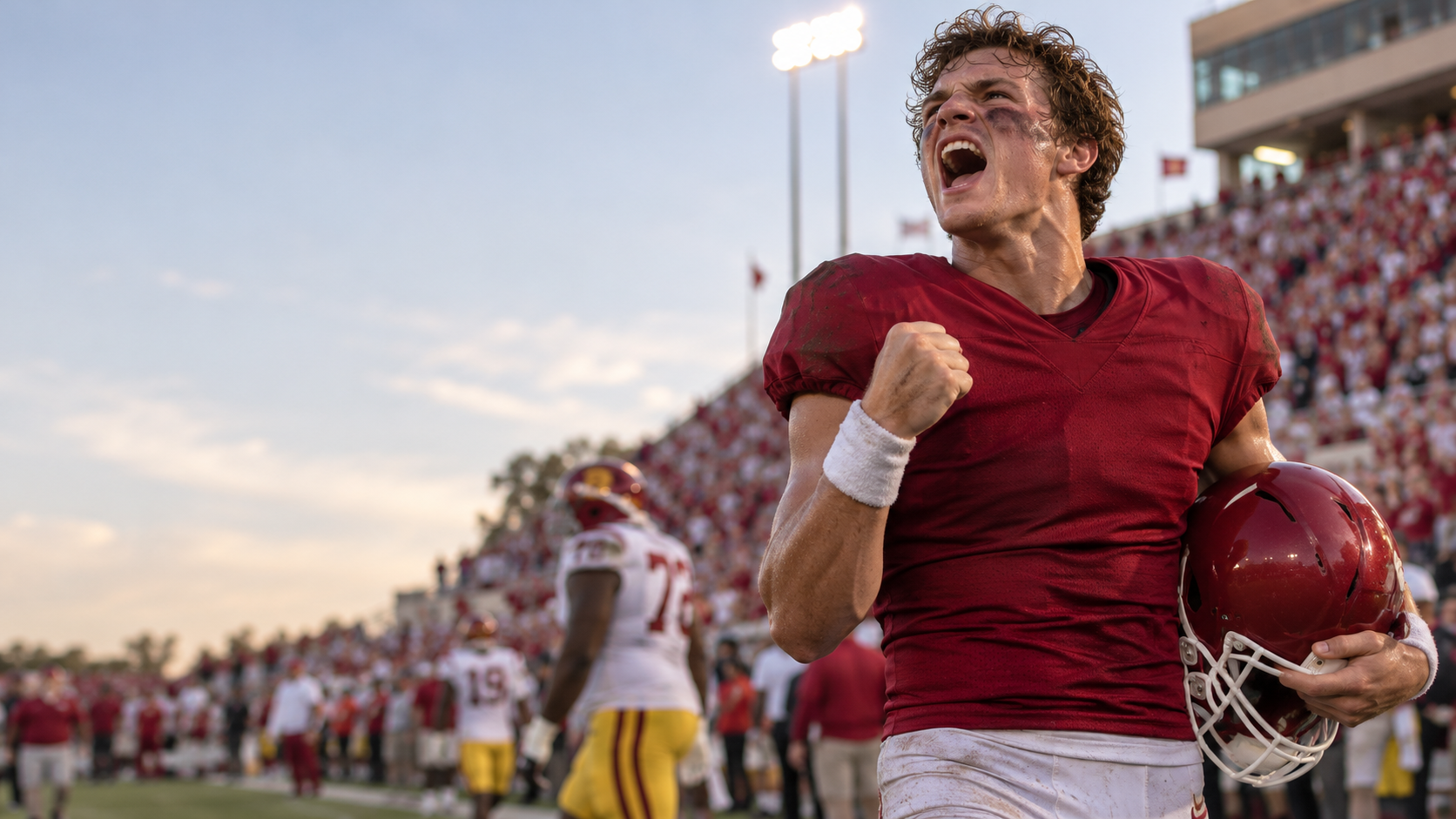
Indiana’s victory over No. 14 USC delivered more than a major result. It also offered a clearer picture of what the Hoosiers can become when quarterback Grant Wilson is allowed to play aggressively.
Curt Cignetti’s decision to start Wilson and expand his freedom changed the conversation around Indiana’s offense. The Hoosiers did not simply survive a ranked opponent. They showed more ways to attack one, creating answers in a matchup that demanded offensive flexibility.
Wilson’s approach helped Indiana address several major questions:
- Who is Indiana’s quarterback?
- Can the offense threaten defenses vertically?
- Is Cignetti willing to adjust his original plan?
- Can Indiana compete with highly ranked opponents?
- Does the team have a credible College Football Playoff case?
The USC win did not settle every issue. It did, however, give Indiana something more valuable than preseason projections or résumé arguments: evidence on the field.
Cignetti’s Decision to Start Grant Wilson Against USC
Starting Wilson against USC was more than an ordinary lineup adjustment. It tested whether Indiana needed a different offensive approach against a nationally recognized opponent.
A conservative quarterback plan can protect a team from costly mistakes, but it can also limit the offense. Against a strong opponent, avoiding negative plays is only part of the challenge. The offense must create enough explosive moments to prevent the defense from controlling the game.
Wilson gave Indiana another option. His style offered faster decisions, more ambitious throws and a greater willingness to challenge coverage. That made the quarterback decision central to the matchup.
According to Sports Illustrated, Cignetti explained when and why he decided to start Wilson against USC. The decision reflected more than a change at one position. It indicated that Indiana’s staff believed the matchup required a quarterback capable of expanding the offense.
More freedom, not less structure
“Letting Wilson rip” did not mean abandoning structure. It meant allowing the quarterback to exploit favorable opportunities.
That freedom can include:
- Attacking matchups before they disappear.
- Throwing beyond the short areas of the field.
- Extending plays when protection breaks down.
- Trusting receivers in contested situations.
- Making decisive reads without excessive restriction.
Aggressive quarterback play works only when it remains connected to preparation, timing and defensive recognition. A quarterback who throws without discipline creates turnovers. A quarterback who understands the structure and attacks within it can force a defense to defend every area of the field.
Cignetti’s decision suggested that he trusted Wilson to operate within those boundaries. Indiana did not need a quarterback who merely avoided mistakes. It needed one who could create opportunities.
Wilson Raised Indiana’s Offensive Ceiling
There is a difference between a quarterback who gives an offense stability and one who gives it a wider range of outcomes. Indiana needed both qualities against USC.
Wilson’s willingness to challenge coverage created the possibility of explosive gains. Even when an aggressive throw does not result in a completion, it can influence the defense. Safeties must respect the deeper areas. Cornerbacks cannot sit comfortably on short routes. Linebackers must account for more space.
That pressure can open running lanes, create room underneath and give play-callers more flexibility on later downs.
The central question was not whether Wilson would complete every ambitious throw. It was whether Indiana could make USC defend more than one version of the offense. Against a ranked opponent, that broader threat can be decisive.
Wilson also helped Indiana avoid predictability. The Hoosiers could use quicker decisions, deeper concepts and throws into tighter windows without reducing the game plan to low-risk passes.
A quarterback willing to take calculated risks makes it harder for a defense to compress the field. Indiana could threaten horizontally with movement and short throws while also testing USC vertically. That combination gave the Hoosiers more ways to sustain drives and create pressure.
The USC Win Strengthened Indiana’s Playoff Case
Defeating No. 14 USC gave Indiana a victory with clear résumé value, as reported by Source 7.
Ranked wins provide direct evidence against respected opponents. They can improve a team’s credibility outside its conference and local market. Indiana’s case no longer depends only on how analysts interpret its schedule. The Hoosiers added a result that carries weight on its own.
Cignetti has emphasized a straightforward argument: Indiana deserves attention because “we win.” The USC victory gave that message additional force. He could point to a result that addressed one of the committee’s central questions: Can Indiana beat a quality team?
The victory did not guarantee a playoff berth. It strengthened the argument.
The College Football Playoff committee considers factors such as:
- Strength of schedule.
- Quality wins.
- Losses and margin of defeat.
- Conference performance.
- Late-season results.
- Overall consistency.
Indiana should treat the USC victory as a foundation, not a final argument. Additional wins would validate the result, while a poor finish could reduce its impact.
What the Wilson Decision Says About Cignetti
The quarterback change demonstrated that Cignetti is willing to revise his approach when circumstances demand it. Coaches must respond to what opponents reveal, how players develop and what a specific matchup requires.
Rigidly following an original plan can become a weakness. A coach who adjusts can turn a concern into an advantage.
Starting Wilson against a ranked opponent also communicated confidence. The decision told Wilson that he had permission to play decisively, while telling the rest of the roster that Cignetti would make difficult choices when he believed they improved Indiana’s chances.
Trust does not eliminate accountability. It can help a quarterback avoid hesitation, which often turns open opportunities into late throws, sacks or checkdowns. Decisiveness gives the offense a better chance to operate on schedule.
The USC game suggested that Indiana found a productive balance between caution and recklessness. Its emerging identity is built around toughness, aggression and flexibility.
Five Key Takeaways From Indiana’s Win Over USC
1. Wilson gave the offense a higher ceiling
Wilson’s aggression created opportunities that may not have existed in a more cautious approach. His willingness to challenge coverage made USC account for deeper areas and gave Indiana more potential paths to big plays.
2. Cignetti made the quarterback decision at the right moment
Cignetti’s explanation, as reported by Sports Illustrated, provides context for the decision. Introducing a different starter against USC carried risk, but the matchup demanded more offensive answers. Wilson’s performance made the move look purposeful rather than reactionary.
3. Indiana proved it could handle a major opponent
Beating USC challenged assumptions about Indiana’s level of competition. The Hoosiers showed that they could perform against a ranked team with national stakes.
4. The supporting cast still mattered
Wilson was important, but he was not the only reason Indiana won. Protection had to give him time, receivers had to create separation, the running game had to remain credible and the defense had to prevent mistakes from becoming points.
Inside the Hall provided additional context on Indiana’s team performance.
5. Indiana has more answers entering the next stage
The USC victory answered immediate questions but created new expectations. Can Wilson maintain his efficiency? Can Indiana preserve its aggression after opponents study the film? Can the team win when defenses use more pressure and disguised coverage?
The win should be viewed as a foundation, not a conclusion.
The Risks of Letting Wilson Rip
Aggression always carries risk. A quarterback who attacks deeper areas can produce explosive plays, but he can also force throws, hold the ball too long or invite pressure.
Cignetti must protect Wilson’s decision-making discipline as his freedom expands. The objective is controlled aggression, not reckless improvisation.
Future opponents may respond with disguised coverages, additional pressure packages, bracket coverage on Indiana’s primary targets and conservative defensive shells designed to limit explosive plays.
Indiana cannot expect the USC plan to work unchanged every week. Its next challenge is developing answers to the answers opponents create.
What Comes Next for Indiana and Grant Wilson
Wilson must turn one strong performance into a trend. The most important markers will include completion efficiency, turnover rate, explosive passes, third-down conversion rate and red-zone execution.
Cignetti must balance freedom with structure. He should preserve Wilson’s willingness to attack while limiting unnecessary risks, adjusting protections and continuing to use matchup-based play-calling.
Indiana must also keep building its playoff résumé. The USC victory strengthened the argument, but continued winning will provide the clearest evidence that the Hoosiers belong in the national conversation.
Conclusion
Curt Cignetti gave Grant Wilson permission to play aggressively, and Indiana gained more offensive answers.
The decision produced a more dangerous offense, a clearer quarterback identity and a major victory over No. 14 USC. It also strengthened Indiana’s College Football Playoff case while demonstrating Cignetti’s adaptability as a coach.
The next question is sustainability. Wilson must maintain his aggression without losing discipline. Indiana must continue protecting him, supporting him and winning against opponents prepared for the new approach.
The USC victory changed the conversation. The rest of the season will determine whether it changed Indiana’s trajectory.
Frequently Asked Questions
Why did Curt Cignetti start Grant Wilson against USC?
Cignetti believed Wilson gave Indiana the right option for the matchup and the team’s offensive needs. Sports Illustrated reported on when and why Cignetti made the decision.
How did Grant Wilson’s freedom affect Indiana’s offense?
Wilson’s greater freedom allowed Indiana to attack more aggressively and challenge USC in more areas of the field. The approach gave the offense additional ways to create opportunities against a ranked opponent.
What did Indiana’s win over USC mean for its College Football Playoff case?
The win strengthened Indiana’s résumé by adding a victory over No. 14 USC. It improved the Hoosiers’ argument for playoff consideration but did not guarantee selection.
What did Cignetti mean by saying Indiana wins?
The statement emphasized that Indiana should be judged by its results rather than its reputation or outside expectations. The USC victory gave that message greater credibility.
Can Wilson remain Indiana’s long-term answer at quarterback?
The USC performance made Wilson a more compelling option. Future games will determine whether he can maintain efficiency, limit turnovers and succeed against defenses that adjust to his style.
What must Indiana improve after beating USC?
Indiana must maintain offensive consistency, protect Wilson, limit turnovers and continue producing quality wins. The team must prove that the USC result represents a sustainable level of play rather than one exceptional performance.